
TANZANIA · MOUNTAIN GUIDE
When Strangers Become a Team
“At the beginning, everyone wants to know: Will I make it? A few days later, they're asking: Will we make it?”
2 August 2026·8 min read
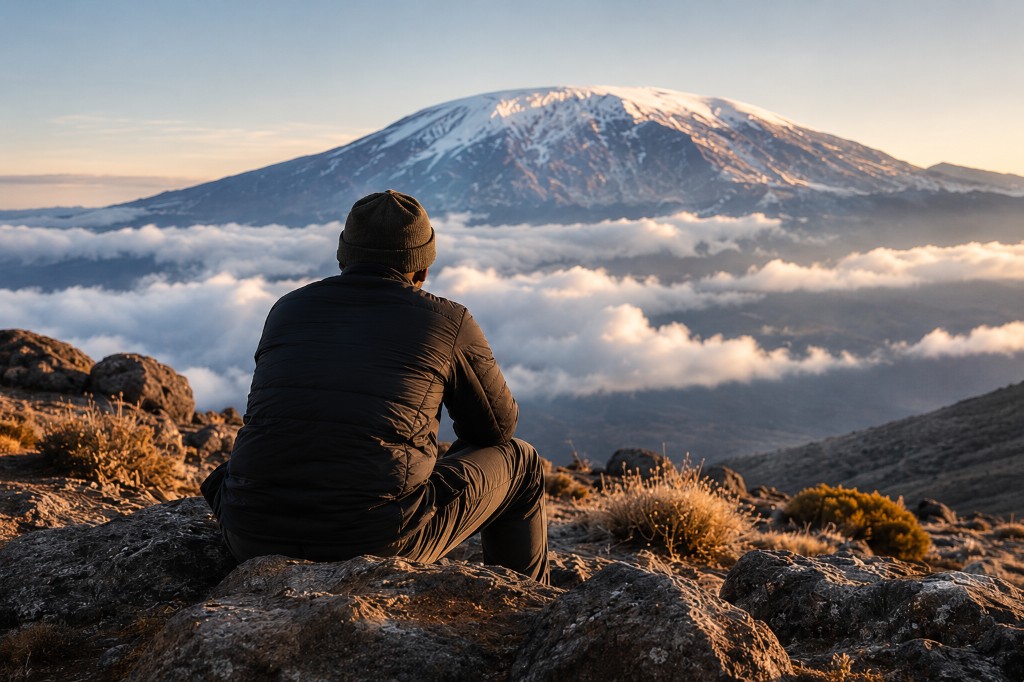
What happens when a group of strangers sets out together — and the mountain quietly changes the way they relate to one another?
Listening across many journeys
This isn’t a conversation with one particular mountain guide.
It’s an editorial reflection, shaped by experiences and observations shared by guides and travellers over the years.
We imagined what we might hear if we brought those experiences into one conversation — and truly listened.
VOICES: When you meet a new group for the first time, what do you notice?
THE GUIDE: Everyone arrives with something different. Some are excited. Some are nervous. Some have trained for months and want to prove to themselves that they can do it.
And usually, people don’t know each other yet. So there’s a little bit of watching. Who is fast? Who has experience? Where do I fit into this group?
As a guide, you notice those things quite quickly.
VOICES: Do you actively try to bring the group together?
THE GUIDE: Yes, but you can’t force it.
You can create the conditions. You eat together. You walk together. You make sure people aren’t always staying with the same person. You laugh. You stop. You wait for each other.
And then the mountain does quite a lot of the work for you.
After a few days, people usually stop worrying so much about where they stand in the group.
VOICES: Is there a moment when you notice that change?
THE GUIDE: Often when somebody has a difficult day.
Maybe they’re tired. Maybe the altitude is affecting them. Suddenly the person who was strongest yesterday is carrying somebody else’s water. Someone stays behind to walk with the slowest person.
Nobody tells them to do it.
That’s when you see the group becoming a team.
At the beginning, everyone wants to know: Will I make it? A few days later, they’re asking: Will we make it?
VOICES: What happens when someone’s personal ambition conflicts with what’s best for the group?
THE GUIDE: That’s one of the hardest parts of guiding.
People have invested a lot in being there. Time, money, training. Reaching the summit can mean a lot to them.
But the mountain doesn’t care about our plans.
Sometimes turning around is the right decision. Sometimes slowing down for another person is the right decision.
And part of guiding is creating a group where people understand that success isn’t only about standing on the summit.
VOICES: Do you think people take something from that experience back into everyday life?
THE GUIDE: I hope so.
On the mountain, things become simple quite quickly.
You notice who checks whether you’ve eaten. Who makes you laugh when you’re exhausted. Who waits.
People who were strangers a few days earlier can become incredibly important to each other.
Maybe that’s what surprises people most.
They come because of the mountain.
But often, when they leave, they talk about the people.
Our reflection
We often think of a journey as something individual.
My destination. My challenge. My summit.
Yet travelling with others asks something different of us.
To adjust our pace. To notice when somebody is struggling. To accept help ourselves. To recognise that reaching somewhere together can matter more than getting there first.
Perhaps that’s part of what travel can quietly teach us:
The journeys that stay with us are shaped not only by where we go — but by how we show up for one another along the way.